One meal a day was the expectation. Three meals were indulgent.
Ashlynd Higgs, 18, a senior at the J. Graham Brown School, twitched her pen back and forth, her eyes focused on the paper. The swelling grocery list lay on the kitchen table, the gravity of each additional item weighing on her mind.
She jotted down recipes for the next week — meals her family of five would be able to afford. Various dinners filled the page, but the edits didn’t stop there.
Scanning through the list, she cut the extras: spices, garnishes and condiments. Each line was a calculation, a way to stretch their food budget just a bit further.
As the oldest of four children in a single-parent household, Higgs had grown to accept the rising cost of food and its impact on her family’s daily life. After the pandemic, tighter budgets and the constant uncertainty about putting food on the table became routine.
Stress overwhelmed her family. When food was available, the household felt at peace. When it wasn’t, tension emerged. Conversations shortened, and dinner became a question that lingered within Higgs’ thoughts.
This anxiety followed her perspective on food. Meals became moral decisions. Hunger became something to manage, something to suppress, something to justify. She started skipping breakfast. Then lunch. On some days, dinner was the only meal she allowed herself. When her mother asked, she would shrug it off, saying she wasn’t hungry, that she was fine.
“I fully convinced myself that I was not worthy of eating that way,” Higgs said.
Inside, she was doing constant math. The weight of being the oldest sibling pushed her to work harder to ensure stability for her family.
Higgs started babysitting, walking dogs and washing cars — small jobs that could add up enough to help. Her mother picked up extra work too, mowing lawns and taking on any odd jobs she could find.
Every dollar helped ensure food would be on the table.
Higgs is just one of many Kentuckians who is suffering from the present rise of food prices in the United States.
In the past few months, buying food has become increasingly unaffordable, with the prices of items such as coffee, meat and produce skyrocketing.
According to a U.S. Bureau of Labor Statistics report, from March 2025 to March 2026, coffee prices have jumped 18.7%, beef prices have climbed 12% and average tomato prices have risen by 22.6%.
The rise didn’t come out of nowhere, though. It originated during the COVID-19 pandemic, as an increased demand for resources and a shortage due to supply-chain disruptions exacerbated prices.
But now with President Donald Trump’s recent tariff- focused trade measures, food prices are climbing, and low- income Kentucky families are feeling the effects. Additionally, cuts to nutritional assistance are worsening the burden.
On April 2, 2025, Trump implemented tariffs that impose a baseline tax of 10% on all countries the U.S has a trade deficit with; some countries face a tariff of up to 50% on goods.
However, on Feb. 20, the Supreme Court struck down these tariffs, declaring that Trump overstepped his authority.
In response, on Feb. 24, Trump implemented a new 10% universal tariff on foreign goods, including food products.
It can be difficult to keep track of these updates and the technicalities they involve, especially with the constant barrage of headlines. The first key to understanding exactly what’s going on is getting the vocabulary right.
A tariff is a tax placed by a government on imported items. It is designed to make foreign produce more expensive. That means with tariffs, food prices go up.
Domestic tariffs are not the only thing creating worsening circumstances for Americans in an already unaffordable market.
The conflict in Iran has caused fuel prices to soar, directly influencing the cost of food, goods and services.
On Feb. 28, the U.S. and Israel launched joint airstrikes targeting Iranian military, nuclear facilities and leadership. Following this action, Iran effectively closed the Strait of Hormuz, a prominent choke point where 34% of the world’s oil, jet fuel and diesel passes through. With this closure, commercial ships have halted traffic, rising global gasoline and oil prices.
These international supply shocks have driven up local prices in the U.S. Now, the price of fuel is up over 30%.
America’s food industry is highly sensitive to fluctuations in oil prices. This is because diesel powers farm machinery and trucks that haul produce into grocery stores. According to the U.S. Department of Agriculture, trucks transport 83% of America’s agricultural products and 92% of fruits, vegetables and nuts.
As the war continues, the cost pressure will likely continue to worsen.
In addition to global fuel prices, the new cuts to nutrition assistance programs are making food less attainable.
The One Big Beautiful Bill Act is a sweeping, multi-trillion dollar legislative package aimed at reducing social spending and lowering taxes for wealthy individuals and corporations. Signed on July 4, 2025, the act cut approximately $1.4 trillion in federal funding for social spending, or the use of public funds toward specific services. Some examples include cash benefits and support systems in the form of healthcare, education and unemployment aid.
One of the primary targets of the bill’s cuts was the Supplemental Nutrition Assistance Program (SNAP).
SNAP, often known as food stamps, is the nation’s leading federal nutrition assistance program. It provides monthly aid to low-income households, allowing them to purchase food through an Electronic Benefit Transfer card.
SNAP is federally funded and state-administered, designed to be countercyclical. This means that, if the economy were to worsen, SNAP enrollment increases. These benefits support and impact Americans by reducing food insecurity, lifting families out of poverty and boosting local economies.
In 2024 alone, more than 42 million Americans relied on SNAP to buy food each month. That’s one in eight Americans — with 70% of those participants being under the age of 18, disabled or elderly.
Higgs is just one of nearly 600,000 residents in Kentucky who relies on SNAP benefits.
However, federal policy changes have made receiving these resources less certain. The One Big Beautiful Bill is expected to cut funding for SNAP by approximately $186 billion over 10 years — a 20% reduction, the largest in the history of the program.
In addition, the act creates stricter work requirements for SNAP participants. A minimum of 20 work hours a week is required for adults ages 55 to 64 and adults with children over the age of 14. If individuals do not comply with these rules, they only receive benefits for a maximum of three months over a three year period.
Together, these changes will result in millions of people losing access to SNAP and struggling to put food on the table.
“We’ve been on SNAP benefits for a couple years and with the fluctuations and the cuts and stuff, it definitely has hit us,” Higgs said. “Recently we’ve had to budget a lot more. It is definitely stressful, especially when we’re told that another cut is going to come.”
Louisville has a robust history with food insecurity, making the present challenges unfavorable for local residents.
In 2023, the food insecurity rate in Louisville was 14.9%. This means over 110,000 residents lack the resources to access nutritious food.
This issue isn’t exclusive to Louisville. Kentucky has a historically high food insecurity rate — 14.2% in 2025.
This number is even higher for youth, with 19% of children facing food scarcity. Both of these percentages are ranked among the top 10 highest in the U.S.
“One in every five children in our community is experiencing food insecurity,” said Vincent James, the president and CEO of Dare to Care Food Bank.
In response to these recent changes, Kentucky lawmakers are proposing bills to protect SNAP benefits in case they are stopped or delayed by the federal government.
Senate Bill 135 and House Bill 522 would establish a process for the governor to prevent interruptions and lapses in nutrition assistance.
However, legislation is not the only way that residents are receiving support among the present challenges. Food banks across Louisville aim to provide for those in need. Dare to Care Food Bank is one of the organizations that helps food insecure communities across Kentuckiana. It partners with local food pantries, shelters and emergency kitchens to distribute food to the community.
In addition to working with other local partners, Dare to Care also operates its own programs to provide pathways toward ending hunger. These programs include their mobile pantry, Cooking Matters nutrition assistance program, Kids Cafe, Prescriptive Pantry and more.
With the recent rise in food prices and cuts to SNAP, the organization has seen greater need from its community. Over the past two years, there has been a 48% increase in demand of SNAP services, with about 168,000 individuals within their 13-county service area experiencing food insecurity.
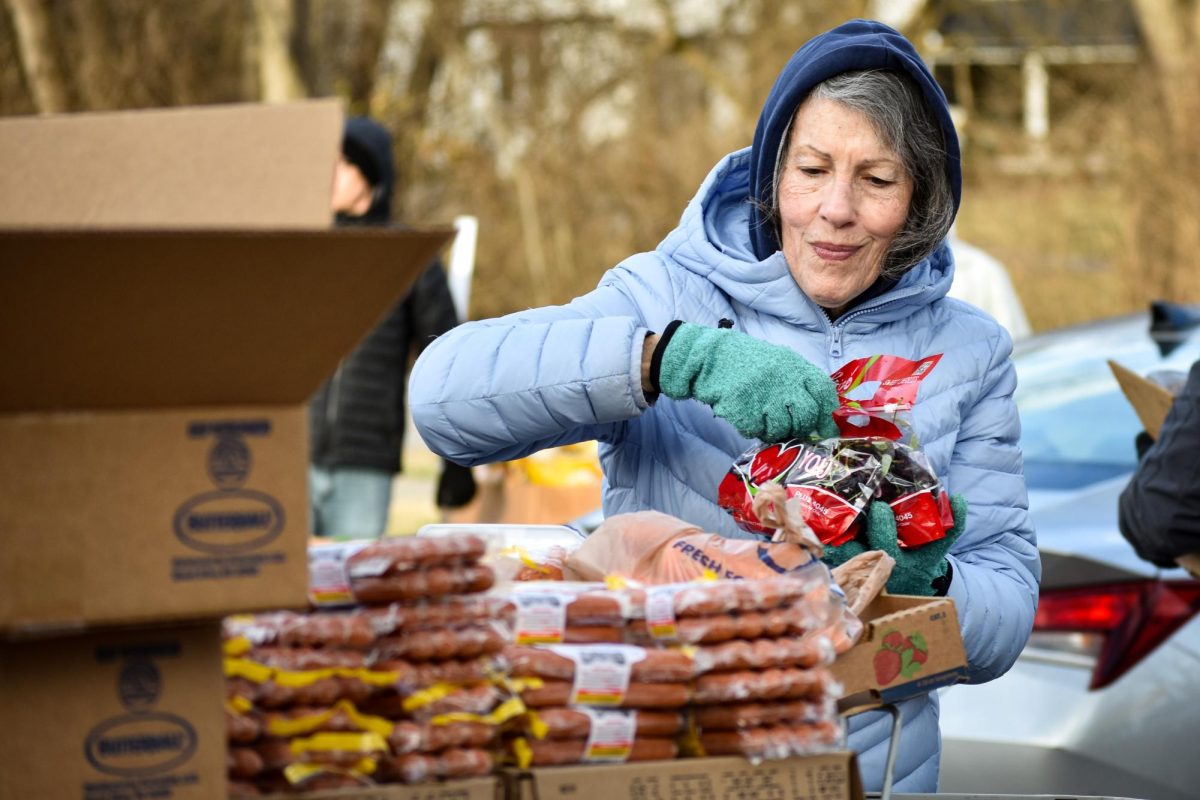
As the necessity for aid rises, service from volunteers allows the organization to meet the immense demands from the community.
Throughout these various projects, residents are able and encouraged to volunteer. Dare to Care Louisville provides an opportunity for those of all ages to get involved.
“The need for volunteers is great because we want to make sure that we’re able to keep our costs down so that we can get the most out for our neighbors in need,” James said. “That’s an opportunity in ways that people can engage as we think about our mission.”
Another food bank is located at the St. Matthew’s Episcopal Church. They are one of the main no-strings-attached food banks in Louisville.
“It is a no questions asked pantry,” Kelly Kirby, the rector of the St. Matthew’s Episcopal Church, said. “We give food to anyone who comes. We just believe them and we want the food to go to people who need it the most.”
The food pantry partners with Dare to Care to receive their resources — Dare to Care provides the food, and the church provides the space and volunteers. They occur every third Saturday of the month and serve hundreds of those in need.
“They give us food for typically 200 families,” Kirby said. “We serve about 600 people, but it can go up to as many as a thousand.”
As these current pressures continue to exacerbate, the gap between income and food costs is widening. Without changes, access to affordable food in Louisville will remain an ongoing and fundamental challenge.
“We have to think about it because behind every number is a human being,” James said. “We see them as our neighbors and we want to make sure that we are meeting the need.”